

Alan Blinder was vice chair of the Federal Reserve from 1996 to 1999, long in the forefront of policy making and thinking as a professor of economics and public affairs at Princeton University and former head of the Council of Economic Advsiors. He also writes op-eds for the Wall Street Journal, authors book after book on key issues in his field, and attends key central bank events like the Kansas City Fed’s annual symposium in Jackson Hole Wyoming where he was one of the first attendees when the event started 49 years ago.
Shortly after Kevin Warsh has delivered his long-awaited speech to kick off the first day of papers and presentations, Alan joins me to discuss what the new Fed chair has said. I start by asking him about what he has referred to as his “infamous” paper presented at the 1994 K.C. Fed Symposium on the Fed’s dual mandate to not only fight inflation but also and equally to maintain low unemployment.
“I put those ‘two and two’ together and said I should talk about reducing unemployment and how that’s an integral part of the Fed’s dual mandate, which to that point - and somewhat after, was a phrase you never heard out of anybody else on the FOMC, and certainly not Alan Greenspan.”
Warsh has presented a list of policy principles in his speech that included the dual mandate. And Alan Blinder could not be happier that Fed leadership has has reaffirmed the importance of the policy principle that he has championed for so long.
“If you had parsed every word he has said since he became chair of the Fed, which most people in the…markets have, he hasn’t mentioned that at all, and it was starting to sound like the Fed was going to slide away from the dual mandate.
So where does Alan see the Fed heading now as the September meeting draws closer? How would he vote if key economic data were to show an economy that is still moving ahead and inflation that has been five years above target? Would he be in favor of a rate hike?
“I would be, yeah, I would be. And this is coming from someone with a dovish reputation,” he says. “If if the choice was go up 100 basis points I would not be. But they move in small increments these days. 25 basis points, I would.”
So dive in and hear why Alan thinks Warsh gave some forward guidance in his speech, and it was hawkish, but that he and the rest of the FOMC are waiting for coming data to make the move. That doesn’t mean the rest of the FOMC will be on board.
Spoiler alert: “Probably. I say probably, because there’s still data to come in and it’s very data dependent. Right now it looks a little bit like a 50-50 call to me… My guess is a clear majority of the FOMC is favoring going up. And if they don’t go up, it’ll be Kevin Warsh who stopped it from happening.
Warsh May not Emphasize it But He Supports the Dual Mandate 00:01:37
I think you know what I am going to say. I, liked <that> he mentioned several times, not just in passing, the dual mandate. If you had parsed every word he has said since he became chair of the fed, which most people in the actual markets have. He hasn’t mentioned that at all, and it was starting to sound like the Fed was going to slide away from the dual mandate. Not legally, but just in its practice towards a mono goal of inflation, like many other countries have, by the way. But he dispelled that idea by bringing up the dual mandate several times. So that’s certainly what I like the best.
Blinder Circa 1994 at Jackson Hole: Dual Mandate- 00:02:34:04
I was I mean, I came. Where to start. Okay. So I joined the fed a few months before that, 1994 Jackson Hole joined the FOMC as vice chairman, and all I had done was vote to raise interest rates. But it was needed. And I thought it was time. And that’s point one. Point two was the subject of that symposium was reducing unemployment, not increasing unemployment, reducing unemployment.
The words unspoken 00:03:11:20
So I put those two and two together and said I should talk about reducing unemployment and how that’s an integral part of the Fed’s dual mandate, which to that point and somewhat after, also was a phrase you never heard out of anybody else on the FOMC, and certainly not Alan Greenspan. I’m not sure somebody is going to parse his words.
…And a Legal Mandate to Boot 00:03:38:10
He may never have said the words dual mandate, I don’t know. But he certainly hadn’t up to that point. And I thought it was important to tell. I was say, tell the public. Tell what tiny fraction of the public pays attention to the Federal Reserve. But I wasn’t just going to vote, right. Vote for raising interest rates up and up and up and up and up, because I only cared about inflation, that I cared about unemployment, and furthermore, much more important than what I cared about, that was all legal mandate, maximum employment and stable.
It was in the Federal Reserve Act 00:04:19:07
It’s in the federal it was then it still is in the Federal Reserve Act. And I thought that was important to remind people, Alan.
A Neglected Phrase 00:04:46:00
Yeah, I think so. It was because nobody had talked about it before. I don’t mean never. I don’t mean never. I’m sure somebody, somebody, out of that phrase at some point. But Alan Greenspan through his chairmanship then, and I’m pretty sure it’s true of the other members of the FOMC, though there are a lot of them had not mentioned it at all.
Inflation Was in Focus 00:05:10:06
The focus was on we were fighting inflation, correct, that we were fighting incipient inflation. Inflation wasn’t actually rising. It was around 3%. <Note: There was no target then>
Too Hot for Zero 00:05:25:10
That’s funny to remember that now. And people are all up in arms about 3% inflation. It was 3% inflation. But the real interest rate was zero because the Fed funds rate was 3%. And all of us thought that was too low zero <Real>. We had a pretty fully employed economy and a zero real interest rate seem low to everybody, certainly including me. And so we voted. I’m pretty sure the votes, initial votes were unanimous to raise to raise rates in order not to get into an inflationary problem.
Close, but No Cigar 00:06:42:22
I think the answer is the Fed more or less achieved the goal and it didn’t last. We didn’t quite get the 2.0% inflation. We got down to about 2.4 or something.
Nearly a Soft Landing? 00:06:58:10
But that’s what I just said. But we didn’t stay there. And that’s why the Fed is concentrating on inflation now. Had we stayed there that would have gone down in history I think as the second perfect soft landing. Small footnote to that. Since you have people that care about central banking listening.
Target Should be a Range 00:07:20:21
I’ve always thought, and I still do, that the target should be a range. Two-point zero, that’s very exacting that that’s a little bit fantastic relative to the control the Fed actually has. So I said it got down to about 2.4. Had the Fed followed me which was a ridiculous thought. The target then would have been one and a half to two and a half and we’d have been right there, two still in the middle… I still I still think they should do that. By the way.
Should ‘Exact’ be the ‘Enemy’ of close? 00:08:05:17
That’s exactly the argument that I was making at the time within the target. And what human being living with it can tell you the difference between 1.7 and 2% annual. That’s in a year, right? Nobody.
Is it Time for a Hike? 00:08:46:08
Probably. I say probably because there’s still data to come in and it’s very data dependent. Right now it looks a little bit like a 5050 call to me. Okay. Yes. Me from my opinion.
It’s Warsh’s Call… Hawkishness was not a surprise 00:09:01:03
Give not my opinion. It’s Kevin Warsh’s that matters. Kevin sounded hawkish. Did it not suit their degrees of hawkish. Yes. Not super hawkish. It’s like raise interest rates and damn the torpedoes. No not like that. Because he did mention the dual mandate several times. But I would I think the market was right to read him as, as hawkish but shouldn’t have come as a surprise.
Warsh is- was- not an unknown 00:09:29:12
Everything he said since he was confirmed as Fed chair sounded a little bit hawkish. If you were going to score on a hawkish dovish scale, a little bit hawkish, which is also his past history. So it’s not like he’s a new guy on the block. He’s been around the while. He’s been a governor of the Federal Reserve. And then he was a private citizen. And then he didn’t hesitate to make comments on that. So I think everybody knew maybe except Donald Trump. Everybody knew that he was on the Hawkish side.
If Numbers Come in Strong Would You Be ready for a Sep hike? 00:10:45:24
I would. Be, yeah. I would be. And this is coming from someone with a dovish reputation. Yes I would be now if the choice was go up 100 basis points I would not be. But they move in small increments these days. 25 basis points I would.
The Committee is Divided 00:11:10:00
The committee is divided. My guess it’s only a guess. Even though they’re all here. I haven’t tried to talk to every member of the FOMC, but my guess is a clear majority of the FOMC is favoring going up. And if they don’t go up, it’ll be Kevin Warsh who stopped it from happening. So there were three dissents, but there are lots of people that have done that.
The Bond Market: Fiscal Policy Meets Investment Boom 00:12:20:12
Two things are going on. First of all, interest rates are creeping up. There are a variety of reasons people are giving for that which come down to supply and demand that the US government is supplying too many new bonds because of the large budget deficit and the AI boom, unlike the internet boom, is partly in bonds they’re raising debt capital.
Bond-buying Ups the Ante on Risk 00:12:46:19
Yes, the internet boom, as you remember, was all equity capital when that went bust. Right? Yeah. It was only people lost their stock market values. This is not like that. And you’ve got the worries about inflation that we’ve just been talking about. So you have reasons for them to go up. The other thing that’s going on, which bothers me a lot as a citizen, is that Secretary Bessent seems to have decided messing around with the bond market is a good idea.
Not a Fan of Bond Market Meddling 00:13:20:24
I don’t think it’s a good idea for among many reasons, it shows that you don’t have confidence in the debt that you should have if you’re the Secretary of the Treasury.
Bessent Is Meddling And Many Other Things Are in Play 00:13:45:05
And are you talking about… fact that interest rates have gone up? I think it’s something that I mentioned and some of these things are global. The most obvious one is large budget deficits. We are not alone with large budget deficits. Japan’s deficit I think is large but going down as a share of GDP. But Europe’s is not. And. These other things that are pushing inflation up like oil shocks, actual, imagined, past, current and future are pushing prices up.
US Is At The Center but Lots of AI demand & Spending 00:14:41:24
So there are common things that affect the whole world economy and even the AI. The AI is still largely us because we’re so dominant in that and especially dominant in the spending side of that. But that’s also happening in the rest of the world on a smaller scale. I was just pondering whether I should exclude China in terms of dollars or RMB spending. China is still small compared to us.
Advice For Warsh 00:15:33:01
I would have said before this morning. This is a good time for some forward guidance. And forward guidance does not have to take the form that you grew to hate during the financial crisis, where the Fed would say things like, we are not going to raise interest rates until January 2014 at the earliest,. That is something that’s not close to appropriate now.
Blinder detected forward guidance 00:15:59:20
I think he gave forward guidance today. And I think forward guidance these days was his giving some reason for the markets that think the Fed’s leaning one way or the other. And I think he did that. Now if he was here in this room and I told him you just gave forward guidance, you might you would probably say, no, I didn’t. But I think he did okay. And I would have advised him had he asked for my advice. I would advise him to do that. I thought it was a good speech.
Alan S. Blinder | Princeton University
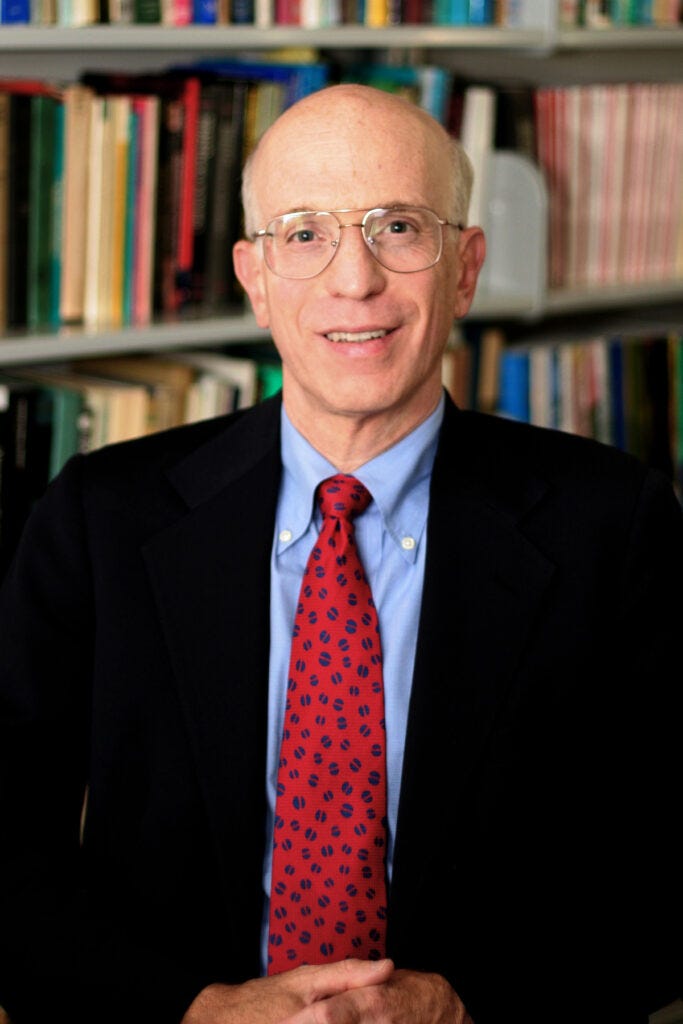
ALAN S. BLINDER is the Gordon S. Rentschler Memorial Professor of Economics and Public Affairs at Princeton University, and a regular columnist for The Wall Street Journal.
Dr. Blinder served as Vice Chairman of the Board of Governors of the Federal Reserve System from June 1994 until January 1996. In this position, he represented the Fed at various international meetings, and was a member of the Board’s committees on Bank Supervision and Regulation, Consumer and Community Affairs, and Derivative Instruments. He also chaired the Board in the Chairman’s absence. He speaks frequently to financial and other audiences, often through the media.
Before becoming a member of the Board, Dr. Blinder served as a Member of President Clinton’s original Council of Economic Advisers from January 1993 until June 1994. There he was in charge of the Administration’s macroeconomic forecasting and also worked intensively on budget, international trade, and health care issues. During presidential campaigns, he has served as economic adviser to Bill Clinton, Al Gore, Hillary Clinton, and the Biden-Harris campaigns. He also served briefly as Deputy Assistant Director of the Congressional Budget Office when that agency started in 1975, and has testified before Congress on a wide variety of public policy issues.
Dr. Blinder was born on October 14, 1945, in Brooklyn, New York. He earned his A.B. at Princeton University in 1967, M.Sc. at London School of Economics in 1968, and Ph.D. at Massachusetts Institute of Technology in 1971—all in economics. Dr. Blinder has taught at Princeton since 1971, and chaired the Department of Economics from 1988 to 1990. He was the Founder and either the Director or Co-Director of Princeton’s Griswold Center for Economic Policy Studies from 1989 to 2011.
Dr. Blinder is the author or co-author of 23 books, including the textbook Economics: Principles and Policy (now with the late William Baumol and John Solow), which is now in its 14th edition, and from which over three million college students have learned introductory economics. His best-selling book, After the Music Stopped: The Financial Crisis, the Response, and the Work Ahead (2013) won several awards. Advice and Dissent: Why America Suffers When Economics and Politics Collide (2018) was published by Basic Books. His latest book, A Monetary and Fiscal History of the United States, 1961–2021 was published by Princeton University Press in October 2022. Dr. Blinder has written scores of scholarly articles on such topics as fiscal policy, central banking, offshoring, and the distribution of income. He also appears frequently on CNBC, Bloomberg TV, and elsewhere.
Dr. Blinder was previously President of the Eastern Economic Association and Vice President of the American Economic Association. He has been elected a Distinguished Fellow of the American Economic Association, and a member of the American Philosophical Society, the American Academy of Arts and Sciences, and the American Academy of Political and Social Science (AAPSS). In October 2023, he was awarded the Daniel Patrick Moynihan Prize by the AAPSS.
He also serves on academic advisory panels for the Hamilton Project, the Center for American Progress, and the Washington Center for Equitable Growth. He is a member of the Council on Foreign Relations and the Bretton Woods Committee, and a former governor of the American Stock Exchange.
Dr. Blinder has also had a successful business career, co-founding two entrepreneurial start-ups.


