

Loretta Mester’s Federal Reserve career spanned nearly four decades, from her start at the Federal Reserve Bank of Philadelphia in 1985 where she rose to become director of research and contined as she went on to become president of the Federal Reserve Bank of Cleveland from 2014 to 2024. Clearly she has helped guide policy through some of the Fed’s most challenging years from deep recessions and the Great Financial Crisis, all the way to the Covid years when the Fed took delayed, but eventually strong, steps to bring down inflation.
Loretta joins me as she receives the New York Association for Business Economics’ William F. Butler Award presented annually to honor leadership in the field of business economics, putting her on the list that includes the likes of Paul Volcker, Alan Greenspan, Janet Yellen, William Dudley and 47 more honorees.
When we sit down to to look where the economy and Fed have been, and where the Kevin Warsh-led FOMC will take policy at its meeting next week, she conveys a sense of urgency that the time for a rate hike is now.
“I think inflation is still too high. I am not convinced it’s on a path to get back down to 2%,” she says. “It’s been above 2% for over five years. And I think the Fed needs to really start taking some action to bring inflation down”
Unlike many current and former Fed officials who see inflation expectations as well anchored and not an issue for policy makers now, Loretta warns that it must be addressed before it does become a problem.
“I’d be a little worried about being complacent that if the Fed doesn’t address actual inflation, that those inflation expectations will remain well anchored at a level consistent with 2%,” she says. “So I think if we wait until longer term inflation expectations have risen, then I think we’ve waited too long.” She says proactive rate hikes are necessary to prevent inflation from becoming embedded in the economy.
So what would she do? What would Loretta push for if she was at the Fed’s meeting next week?
“I’d go into that meeting making the argument that it’s time to bring up the interest rate, the reason that you should be worried about inflation remaining above target for as long as it’s been above target is because the risk that inflation becomes more embedded in terms of the way households and businesses think about future inflation rate matters.” She favors moving now before inflation gets even higher and harder to control.
Will the FOMC’s decision be determined by Friday’s CPI report?
“The Fed is not data point dependent, but it sounds like it. That certainly is a piece of important data. But I think all the policymakers on the committee are going to be looking at all the data that has come in since their last meeting”
Loretta largely supports the list of monetary policy principles clarifying the Fed’s framework and dual mandate that that Kevin Warsh laid out in speech in Jackson Hole at the Kansas City Fed’s annual policy symposium. She also applauds Warsh’s emphasis on the 2% inflation target and his reluctance to provide forward guidance, which she agrees is not appropriate in the current environment.
She also agrees with Warsh that “the real risk is on the inflation side of the mandate, not on the maximum employment part of the mandate.” This aligns with her own view that the labor market has reached maximum employment and that the Fed’s primary challenge is now inflation.
So dive and hear why Loretta expects President Trump’s recent public statements about why the Fed should not raise rates no, and instead should be cutting them, will have no impact on the FOMC’s decisions now or in the future.
Spoiler alert: “I think the Fed has to do its job, which is when they go in that room, they’ve got to put all that other stuff aside and really focus in on what’s the best level of the federal funds rate to meet my dual mandate goals of maximum employment and price stability.”
IMPORTANT NOTE ON TIMING OF MESTER INTERVIEW: Pre-PPI and CPI
I joined Loretta at the NYABE Butler Award event held this week on the afternoon of Wednesday September 9 BEFORE the release of the August producer price report on September 10 and the August consumer price report on September 11. Making her points in this interview that the Fed can be data dependent in its policy decisions but NOT “data POINT dependent” all the more important.
Inflation is too high 00:01:19:16
Think inflation is still too high. I am not convinced it’s on a path to get back down to 2%. It’s been above 2% for over five years. And I think the Fed needs to really start taking some action to bring down inflation.
Maybe too much attention on CPI report… 00:01:51:05
Well, unfortunately, after Governor Waller’s speech, I think everyone interpreted that as being that’s the real report to watch. And I don’t think that that’s really what he was intending, in the sense that the Fed is not data point dependent, but it sounds like it. That certainly is a piece of important data. But I think all the policymakers on the committee are going to be looking at all the data that has come in since their last meeting.
FOMC needs to ask itself THE key question 00:02:21:13
And what I hope they are asking themselves is the essential question, which is… is the current level of the federal funds rate at the level needed to get inflation back down to 2%? And when I asked myself that question, I would say no, given what we what evidence we have in terms of the inflation trends, but also in terms of the strength of the real side of the economy, the fact that maximum employment, I think, has been reached, and the fact that it’s hard to argue that the current level of policy is restrictive.
So…Is policy restrictive? 00:02:57:00
And I think you need restrictive policy to get inflation back down to 2%.
Risk of embedding too-high inflation expectations 00:03:33:05
So, I’d go into that meeting making the argument that it’s time to bring up the interest rate. The reason that you should be worried about inflation remaining above target for as long as it’s been above target is because of the risk that that inflation becomes more embedded in terms of the way households and businesses think about future inflation rate matters.
Lifetime views are formed by real world experience 00:04:00:06
So, it’s. Basically, you know, there is a lot of research that actually shows that your inflation expectations are determined by their lifetime experience with inflation. So, we have some people now making decisions, business decisions that have only experienced some high inflation. Right. So, we have to really be thinking about it. If we leave inflation at the level, it currently is and not take decisive action to bring it down, then you’re creating a problem in the future because their experience is going to make them much more attentive to inflation. So, the Fed will have less leeway to look through perhaps some of the temporary movements in inflation than they currently have. So that’s why you want to make sure that you’re actually addressing inflation issues. And if it lasts longer, there’s more risk that it changes the inflation dynamic in a way that’s kind of harmful for the future.
Must take appropriate steps on time 00:05:34:21
Well, I’d be a little worried about being complacent that if the Fed doesn’t address actual inflation, that those inflation expectations will remain well anchored at a level consistent with 2%. So, I think if we wait until longer term inflation expectations have risen, then I think we’ve waited too long, or the committee has waited too long. Right. You want to make sure that you are taking appropriate action to justify those longer-term inflation expectations.
Expectations are different from inflation’s future path 00:06:06:02
I don’t think you can be complacent about it and what we saw during the pandemic. Of course, is that long run inflation expectations stayed pretty well anchored. And yet inflation still rose to 40-year high. So just because longer term inflation expectations remain well anchored, doesn’t mean inflation necessarily comes back down to 2%.
Warsh’s list of First Principles was good 00:06:56:18
Well, I think those were good. It was good that he laid out sort of part of the framework. And I think that I can consider the principles he laid out as really foundational elements of how you do monetary policy. I think the other thing, and it was good that he clarified, endorsed the dual mandate. Of course, those are the goals that Congress has given the Fed.
Affirms dual mandate and the 2% PCE target 00:07:21:20So, I think that was an important thing for him to do. He also underscored that the inflation target is 2% year over year to PC inflation at 2%, and that that’s going to be the target. I think that was important for him to do. But the other part of the speech that I thought was particularly helpful, and I wasn’t necessarily expecting it, was that he laid out his view of the current economy and what he views as sort of the underlying trend in inflation, and sort of how he’s thinking about policy.
After Jackson Hole we know more about how Warsh views the economy 00:07:59:21
It wasn’t forward guidance, which we know is something that he doesn’t support, and nor would I in current circumstances either. So, he didn’t say, this is what I plan to do at the future meeting. But we did get a sense of how he is viewing the economy and what are some of the risks that he’s keeping his eye on. And I thought that was very effective.
Warsh handicapped the Dual Mandate 00:08:44:15
Well, he told us where he thought the Fed was in monetary policy was in relation to both parts of the mandate. He told us that maximum employment rate he believes has been reached. And he pointed to a number of indicators. Right. The low unemployment rate. Right. Pretty good employment growth given the, you know, restrictions on supply. And then he said that the issue was inflation. Listening to that speech. Right. I thought he made a pretty cogent case for taking action to address the inflation. He didn’t tell us that that’s where he is now. But he did say that that’s kind of where he’s thinking about policy. Every fed official wants a soft landing, right. No one wants to create pain. But I think in Kevin’s view, the real risks are on the inflation side of the mandate, not on the maximum employment part of the mandate.
Warsh is making progress on his own communications 00:10:32:22
Look, I think there’s improvements that the Fed can make to its communications. I think that, you know, I think Chair Warsh really wanted to put a stake in the ground in his first couple of press conferences, basically saying we’re not going to give forward guidance anymore. You know, we want the markets to be evaluating the data. And we’re going to, you know, stick to that. And I think given that he wanted to do that, he did that. But I also think that that’s not sustainable. And I thought his Jackson Hole speech was a good step into trying to convey the Fed’s reaction function. So, I think that there is more work to be done on that. I think the task force is welcome in the sense that there are a number of ways that the Fed has communicated that can be improved.
Could be improvement in the presentation of the SEPs 00:11:22:05
Could be improvement in the presentation of the SEPs 00:11:22:05
I think the survey of economic projections; summary of economic projections can be improved. I think there are things that the Fed can do to be more effective. I think the key thing is figuring out how the Fed can explain, right, how the economy is going, what their modal outlook is, but also some scenarios that are, you know, alternative views of how the economy could evolve and the implications for monetary policy. And that kind of thinking about reaction functions, I think, is something that the fed can work on. So, communicating about reaction.
Are scenarios being used? 00:12:49:21 -
Ben Bernanke actually was brought in to review performance of the Bank of England in the pandemic and post-pandemic period. And he made the suggestion to them, if they use scenarios and they’re actually doing it. And if you look at the minutes of the Fed, the last couple of Fed meanings, it does appear that they’re having more discussions about alternative scenarios, which I think are very welcome and probably in a different way than perhaps we did before.
Scenarios are a good tool- 00:13:19:01
So, scenarios, I think, are an important tool for explaining to the public, right, how monetary policy can be expected to change depending on how the economy changes. And in a world that is much more, I’d say uncertain, and not just because of business cycle considerations, but because the underlying structure of the economy may be changing. I think scenarios are important to think about because, you know, usually what the folk does is it talks about its modal outlook and maybe risk around it. But there are also scenarios, right, that may be almost as equally likely as that modal view and yet require different monetary policy decisions. So again, I think the scenarios are a good tool, right, to help the Federal Reserve communicate, but also to prepare them for different policies depending on how the economy actually evolves. If they talk about it in advance about what would be appropriate policy under an alternative scenario, then as information comes in, that looks like that scenario is more likely they’re more prepared to act.
Employment portion of the dual mandate has been fulfilled 00:14:47:10
I think they’ve achieved maximum employment. I think what I like to see more hiring, you know, I think at this point, yes, because there are some signs at certain parts of the labor market could be hired. We know that a lot of college grads had a tough labor market but given that labor supply is constrained because of immigration policy, because of demographics, right. I think we’re at an equilibrium in terms of demand and supply. So, the labor market really isn’t a source of inflation pressures. And I think we’ve reached the maximum part of the mandate. Right. Because it’s really what’s is labor market imbalance right. Or is it contributing to inflation on the inflation side you can’t say the same thing because we’re above the target.
FOMC will focus on best way to bring inflation down 00:15:35:22
So, I think that’s where the discussion at the meeting will be centered. And it will be what’s the best approach for making sure that inflation comes down. There’s going to be, I think, some that will continue to argue that it’s time to raise rates. And I think they’ll also be some that continue to argue. We want to see more data.
Must focus on if Fed funds rate is on right path to reach objectives 00:16:44:21
I think the Fed has to do its job, which is when they go in that room, they’ve got to put all that other stuff aside and really focus on what’s the best level of the federal funds rate to meet my dual mandate goals or maximum employment and price. And I know that that’s what they’re how they’re going to approach the job.
Trump’s policy demands are not helpful 00:17:02:06
But I’d say that the president’s trying to influence policy is not helpful. And it puts the I think it creates a challenge in the sense that because, you know, it’s the president telling saying this about the fed, right. Think about if they do decide right to, to raise rates, that’s going to create more consternation from the administration. But if they decide not to, I’m sure there’s going to be people that say that the fed was influenced.
Above the fray 00:17:35:14
That the Fed may not be influenced in any way, but I think it raises concern.
Fed should have single focus on the Dual Mandate- 00:18:19:04
Say, I don’t like any kind of other influence on the Fed, right, they should be taking each time they go into the room and only be concerned with is the level of the Fed funds rate at the right level to get inflation back down to 2% and get and keep maximum employment. And any of these other considerations should not be part of the discussion.
Fiscal situation worthy of worry 00:19:23:01
I think the fiscal situation is one to be concerned about. I see no evidence in anybody, regardless of political party is willing to take the hard decisions that are going to be necessary to put fiscal policy back on the fiscal debt situation, back on a sustainable basis. Eventually, you’re exactly right in the sense that, you know, it could come to a time where if the deficits keep rising, right, that even if the fed intends to set monetary policy right to achieve price stability, it won’t have the ability to do that because the fiscal deficit will be so large, it won’t be even in the feasible set that they can. So, I worry about fiscal dominance. We’re not there yet. Right. Right now, the fed is in control of monetary policy. And being able to set it in pursuit of those dual mandate goals.
Large risks looming over fiscal inaction 00:20:24:04
But I think we have to take action or else on the fiscal the fiscal authorities have to take action, Congress, the administration to bring deficits down, or else we’re going to get into a very difficult situation.
Debt management is in the Treasury’s exclusive domain 00:20:42:12
Treasury debt management or government debt management should be in the purview of the Treasury. They have an advisory council that helps them decide sort of what that composition should be. And they need to take control of that and decide. The Fed has to consider that that’s sort of part of the environment but then set monetary policy to achieve its mandate goals.
Lots of pressures on market rates 00:21:30:17
So, I you know, why is it you’re thinking about the Treasury intervening in the markets, right, in the buybacks, you know, you have to ask yourself, well what is the level. Why is the level of the long end where it is right. Part of it is because there the supply is outweighing the demand. Right. And so, interest rates have to go… yields have to go… up on the long debt, to bring that into balance. Right. Those pressures are going to exist until the fiscal authorities get the public debt situation in the US on a sustainable basis. So again, there’s a lot of pressure on that long-end, independent of where the Fed is setting its short-term interest rate. And I think that is driving what’s going on in the long end of the bond market.
Various long end pressures 00:22:39:22
I think it’s I think you could say that that’s part of it in the data so far. You don’t see that, right. But you know, we measure these inflation expectations, you know, not precisely. So, you could argue that concern about the Fed’s independence, uncertainty about the Fed’s reaction function. There’s got to be a premium on that to hold things long right. Concerns about the fiscal budget situation in the United States. All of those can be contributing to the long end. Right. And the other thing that’s contributing to a higher long end, of course, is stronger growth, right in the US. So again, there’s a number of reasons that the long end of the bond market, we see higher interest rates right now.
Why did you study economics? 00:23:50:11
Well, the thing that attracted me to economics was that it is a way of doing hard, you know, technical, scientific work, but it has an impact on real people. And to the extent that you can understand what’s happening in the economy. And I was affected. Economist what, you know can inform the Fed’s policy making, whether it be, you know, banking, you know, regulatory supervisory policy and whether it be monetary policy, you can actually affect real people’s lives in a positive way if you do it correctly. And so, I think that’s a very attractive thing. It has the science part of it, but it also has the humanity part of it.
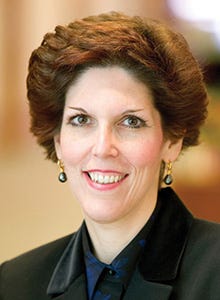
Loretta Mester
Loretta J. Mester served as president and chief executive officer of the Federal Reserve Bank of Cleveland from June 2014 to June 2024. In that role, she participated in the formulation of US monetary policy and oversees more than 1,000 employees based at the Bank’s Cleveland office and Branch offices in Cincinnati and Pittsburgh who conduct economic research, supervise banking institutions, promote community development, and provide payment services to depository institutions and the U.S. Treasury. Mester represented the Fourth District on the Federal Open Market Committee (FOMC).
Mester began her career at the Federal Reserve Bank of Philadelphia in 1985 as an economist and was executive vice president and director of research at the Federal Reserve Bank of Philadelphia prior to her appointment as president and CEO of the Cleveland Fed on June 1, 2014.
Mester is an adjunct professor of finance at the Wharton School of the University of Pennsylvania. She has also taught in the undergraduate finance and M.B.A. programs at Wharton and in the Ph.D. program in finance at New York University.
Mester is a director of the Greater Cleveland Partnership, a trustee of the Cleveland Clinic, a trustee of the Musical Arts Association (Cleveland Orchestra), a director of the Council for Economic Education, a founding director of the Financial Intermediation Research Society, a member of the senior council of the Central Bank Research Association (CEBRA), and a member of the advisory board of the Financial Intermediation Network of European Studies (FINEST). She is a member of the American Economic Association, the American Finance Association, the Econometric Society, and the Financial Management Association International.
Mester graduated summa cum laude with a bachelor of arts degree in mathematics and economics from Barnard College of Columbia University. She earned M.A. and Ph.D. degrees in economics from Princeton University, where she was a National Science Foundation Fellow.
Her tenure concluded on June 30, 2024, consistent with Federal Reserve mandatory age and length-of-service policies.


